 |
Concept Neuro & Spine Care hospital 24 Hour Emergency Facility Available |


Dr. Parimal Tripathi
 |
Dr. Ketan Patel M.S., M.Ch (Neurosurgery) |
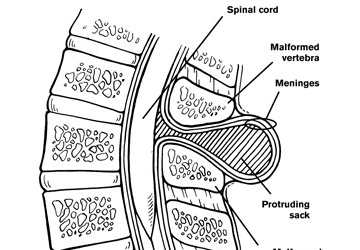
Spina bifida is a birth defect that involves the incomplete development of the spinal cord or its coverings. Spina bifida occurs at the end of the first month of pregnancy when the two sides of the embryo's spine fail to join together, leaving an open area. In some cases, the spinal cord or other membranes may push through this opening in the back. The condition usually is detected before a baby is born and treated right away.
Symptoms
A newborn may have a sac sticking out of the mid to lower back. The doctor cannot see through the sac when shining a light behind it. Symptoms include :
• Loss of bladder or bowel control
• Partial or complete lack of sensation
• Partial or complete paralysis of the legs
• Weakness of the hips, legs, or feet of a newborn
Other symptoms may include:
• Abnormal feet or legs, such as clubfoot
• Build up of fluid inside the skull (hydrocephalus)
• Hair at the back part of the pelvis called the sacral area
• Dimpling of the sacral areaThe spina bifida cases are most commonly:
The spina bifida cases are most commonly:
• Spina bifida occult, a condition in which the bones of the spine do not close but the
spinal cord and meninges remain in place and skin usually covers the defect
• Meningoceles, a condition where the tissue covering the spinal cord sticks out of the spinal defect but the spinal cord remains in place.
Other congenital disorders or birth defects may also be present in a child with myelomeningocele. Hydrocephalus may affect as many as 90% of children with myelomeningocele. Other disorders of the spinal cord or musculoskeletal system may be seen, including syringomyelia and hip dislocation
Treatment
• After birth, surgery to repair the defect is usually recommended at an early age. Before
surgery, the infant must be handled carefully to reduce damage to the exposed spinal
cord. This may include special care and positioning, protective devices, and changes in the methods of handling, feeding, and bathing.
• Children who also have hydrocephalus may need a ventricular peritoneal shunt placed. This will help drain the extra fluid
.
• Antibiotics may be used to treat or prevent infections such as meningitis or urinary tract infections.
• Genetic counselling may be recommended. In some cases where severe defect is detected early in the pregnancy, a therapeutic abortion may be considered.
 |
 |
|||