 |
Concept Neuro & Spine Care hospital 24 Hour Emergency Facility Available |


Dr. Parimal Tripathi
 |
Dr. Ketan Patel M.S., M.Ch (Neurosurgery) |
Arteriovenous Malformations
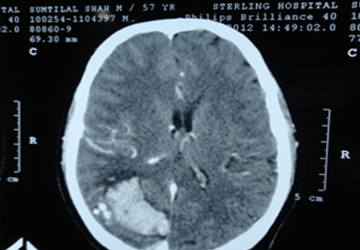
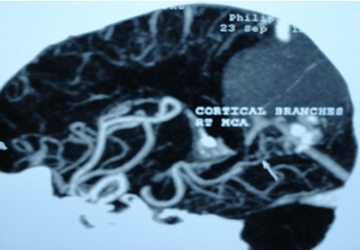
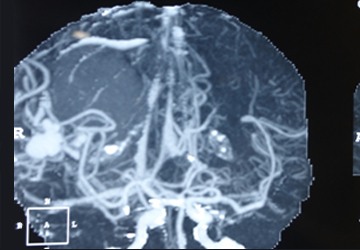
A brain AVM (arteriovenous malformation) is an abnormal connection between arteries and veins that interrupts the normal flow of blood between them. An AVM, which is present at birth (congenital), can develop anywhere in your body but occurs most often in the brain or spine. A brain AVM, which appears as tangles of normal and dilated blood vessels, can occur in any part of your brain. The cause isn't clear. Doctors believe that a brain AVM develops during fetal development. Why this occurs for some babies and not others is unknown.
One may not know one has a brain AVM until symptoms develop, such as headaches or a seizure. In serious cases, the blood vessels rupture, causing bleeding in the brain (hemorrhage). Once diagnosed, a brain AVM can often be treated successfully.
Normally heart sends oxygen-rich blood to brain through arteries, which branch into smaller arterioles and subsequently to capillaries, the smallest blood vessels. Oxygen is removed from blood in the capillaries and used by brain. The oxygen-depleted blood then passes into small venules and then into larger veins that drain the blood from brain, returning it to heart and lungs to get more oxygen. If one has a brain AVM, blood passes directly from the arteries to the veins via abnormal vessels. This disrupts the normal process of how blood circulates through brain.
A brain AVM (arteriovenous malformation) often causes no signs or symptoms until the AVM ruptures, resulting in bleeding in the brain (hemorrhage).
Signs and symptoms of a brain AVM include:
• Seizures
• A whooshing sound (bruit) that can be heard on examination of the skull with a stethoscope
• Pulsing noise in the head (pulsatile tinnitus)
• Headache
• Progressive weakness or numbness
When bleeding into the brain occurs, signs and symptoms can be similar to a stroke and may include:
• Sudden, severe headache
• Weakness or numbness
• Vision loss
• Difficulty speaking
• Inability to understand others
• Severe unsteadiness
A bleeding brain AVM is life-threatening and requires emergency medical attention. Symptoms may begin at any age, but one is more likely to experience symptoms before age 50. Brain AVM can damage brain tissue over time. The effects slowly build up, sometimes causing symptoms in early adulthood. Once one reaches middle age, however, brain AVMs tend to remain stable and are less likely to cause symptoms.
For women, pregnancy may start or worsen symptoms because of the increased blood flow and blood volume during pregnancy.
Treatment options for brain AVM involve a number of procedures and depend on the size and location of the abnormal blood vessels. Medications may also be used to treat related symptoms, such as headaches or seizures.
Surgical Removal (Resection)
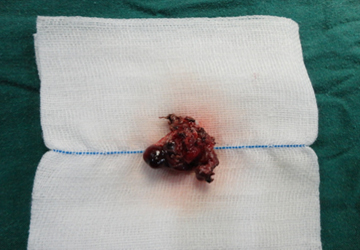
Surgical treatment of a small brain AVM is relatively safe and effective. A section of skull is removed temporarily to gain access to the AVM. The neurosurgeon, aided by a high-powered microscope, seals off the AVM with special clips and carefully removes it from surrounding brain tissue. Sometimes this is done with a laser. The skull bone is then reattached, and the scalp is closed with stitches.
Resection is usually done when the AVM can be removed with acceptable risk to prevent hemorrhage or seizures. AVMs that are in deep brain regions carry a higher risk of complications. In these cases, other treatments are considered.
 |
 |
|||
 |
 |
|||